Planning one shoot for multiple content formats
A film, vertical edits, stills and short cuts can all come from the same days. How to plan a shoot in Belize so one set of days feeds every channel.
By Tide & Co.
Shoot days are the expensive, weather-dependent, hard-to-repeat part of any production. Editing is comparatively cheap. The most useful thing you can do before a shoot is decide what the footage has to become, so that one set of days feeds the hero film, the vertical edits for social, the stills and the short loops for a website, instead of producing one film and a scramble afterwards.
Decide the formats before the camera comes out
Write down, in order of importance, what you need:
- The main film, the piece that carries the story with sound.
- Short vertical edits for the feed, which have to work in the first seconds and often without sound.
- Stills for the website, listings and press.
- Short silent loops for web pages and presentations.
Knowing this changes how you film. A shot that works at 16:9 may have the subject at the edge of a 9:16 frame, so frame for both.
Plan around moments, not formats
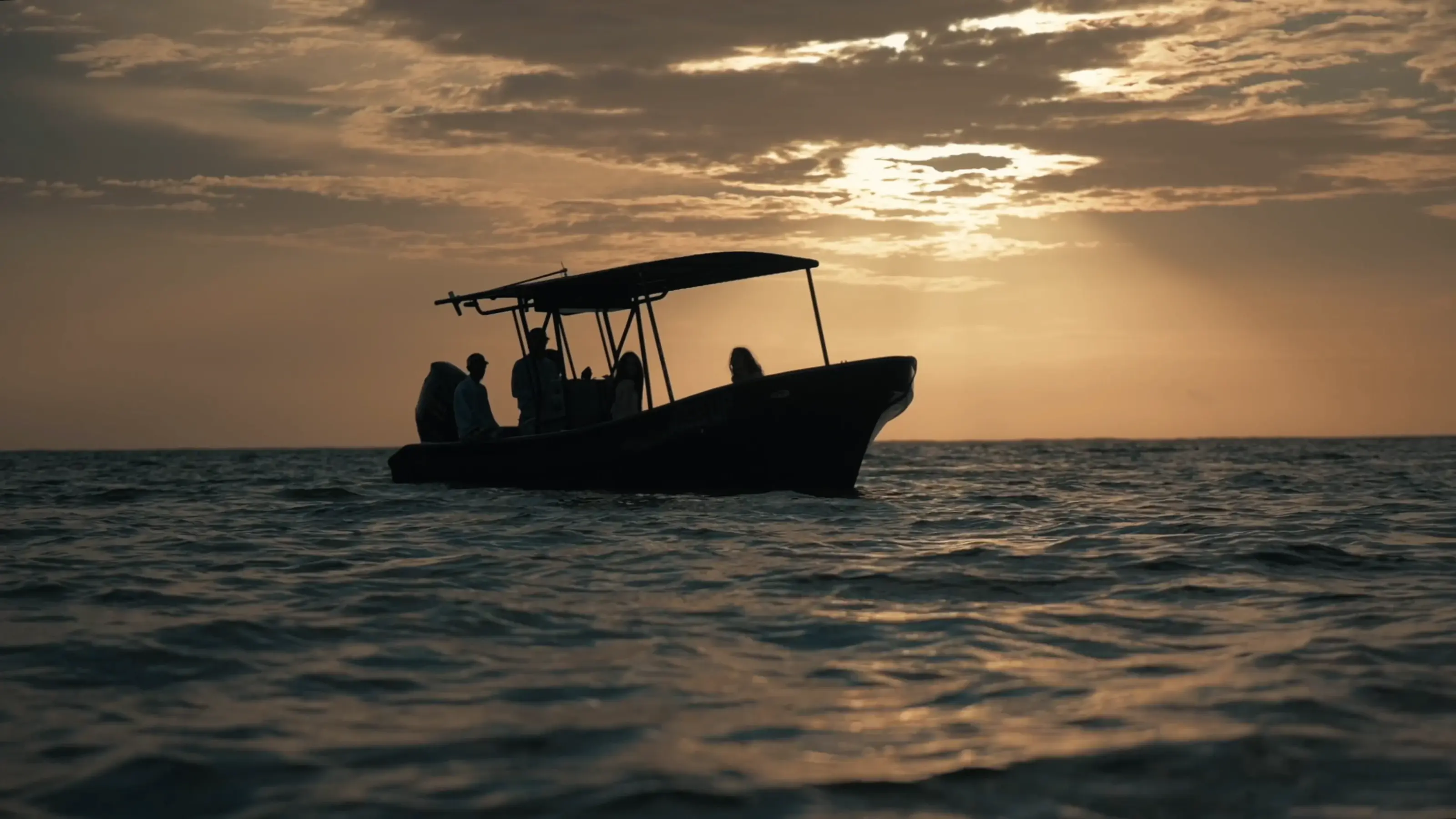
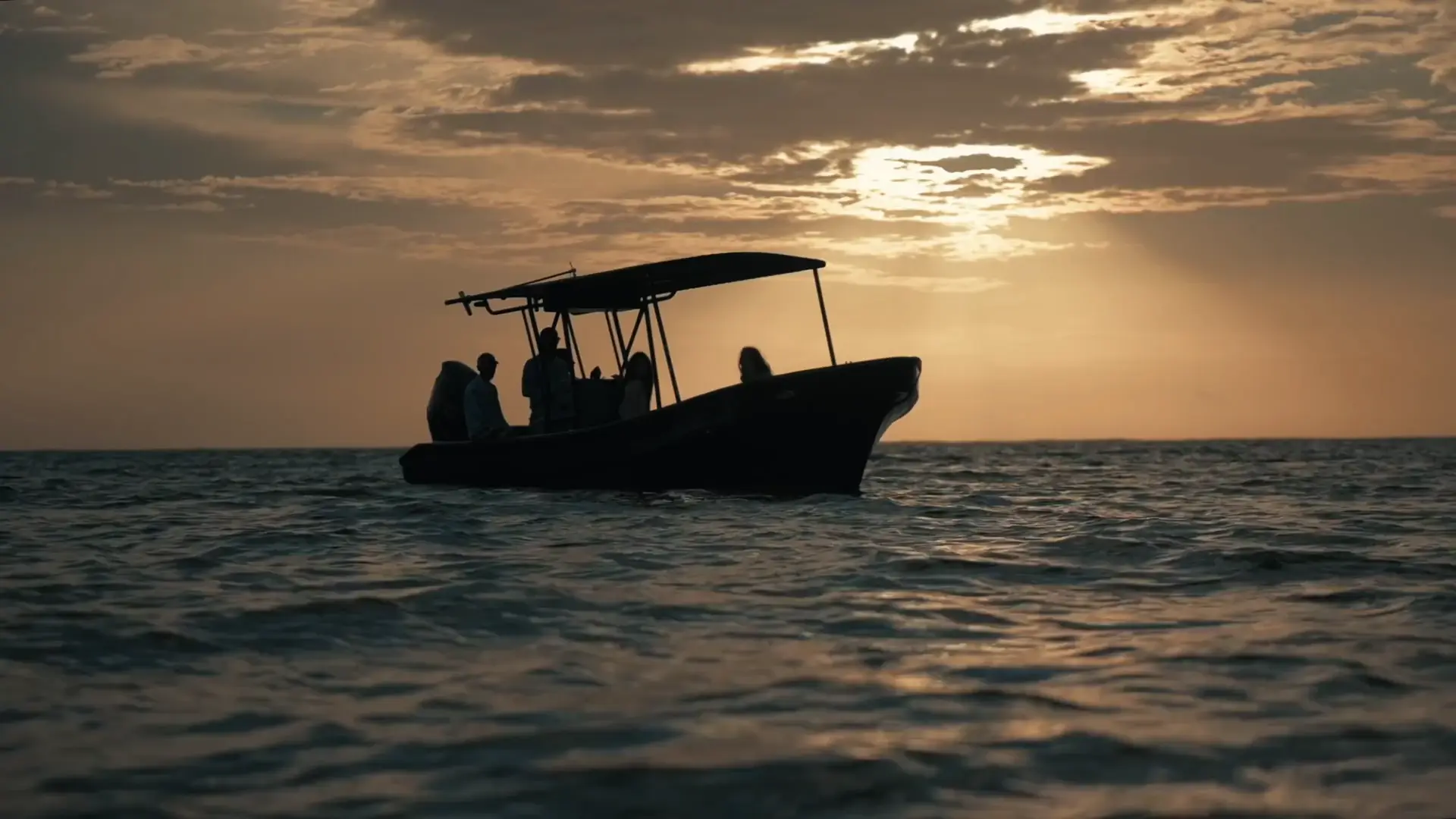
Make a list of the moments the shoot has to capture, then let each format take what it needs. For the Rise Up Expeditions film in Belize the moments were the day itself: a sunset departure, hands in the sea, the first look through a snorkel mask, a stingray over the sand, the boat from directly above. We filmed on the boat, in the water and from the air, cut the main film as one continuous day, and then made short vertical edits from the same days. See the Rise Up Expeditions case study.
Shoot for the widest and the tallest frame
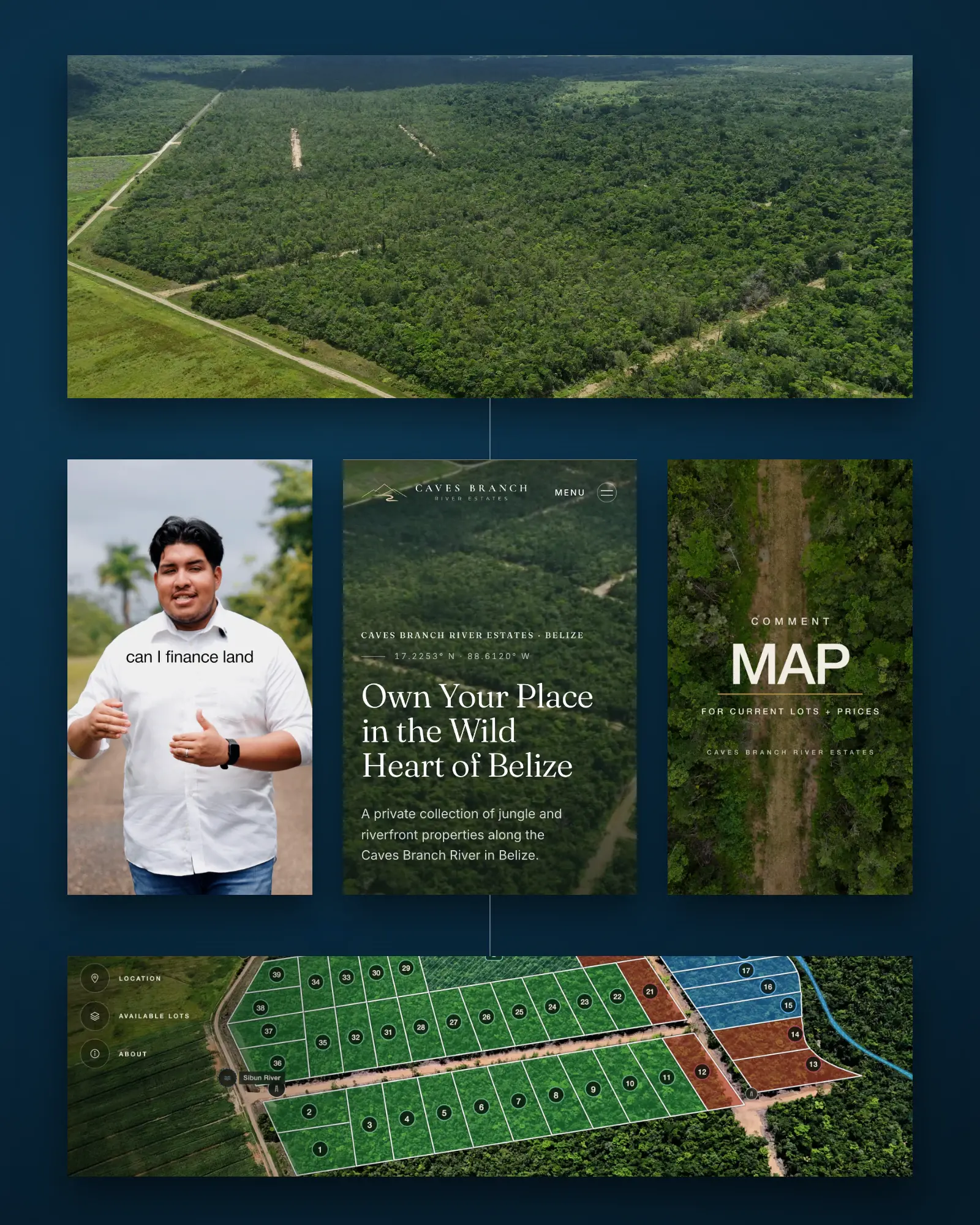
Vertical video is not a crop afterthought. Shooting in high resolution, composing so the subject can survive a tall crop and tracking the crop through the shot are the difference between a vertical edit that feels designed and one that feels cut off. The same applies to people: someone walking left to right in a wide frame needs the crop to follow them.
Treat sound as its own deliverable
Interviews, natural sound and a clean room tone are worth planning for, because they are what make a short cut feel real. In our work with founder Stephen Mater, one set of footage became a documentary of about 30 minutes, a 44-second trailer, a 30-second captioned vertical edit and a separate 25-second vertical film built from his own words. The interview audio carried all of it. Read more in the Stephen Mater case study.
Edit from the top down
Finish the main film first, then build the cutdowns from it and from the leftover moments. Each short edit should open on a clear hook, make one point and end cleanly. If it will be seen without sound, caption it.
Leave time for the details
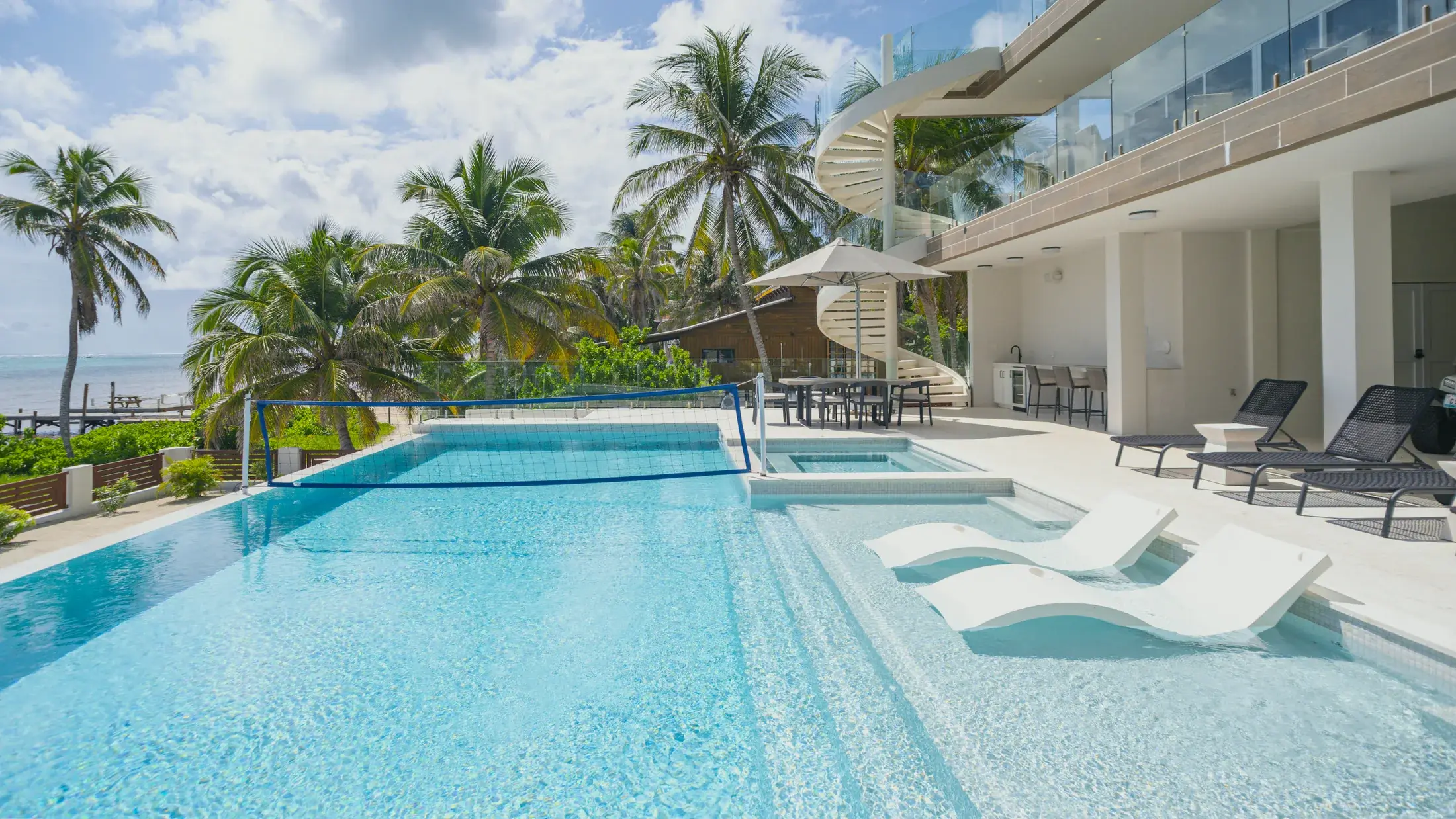
The details are what a library is made of: the pool edge, a glass on the table, hands on a rope. They fill the gaps in a cut, make good stills and cost almost nothing to capture while you are already there.
Be there in person
Planning on paper only goes so far. We plan, direct and shoot our projects in person in Belize, which means we see the light, the tide and the people before we commit to a plan. That is also how we know what a day will offer for each format.
A note on results: the Rise Up Expeditions case study reports measured results of the wider organic campaign separately from the film, and the two should not be confused. If you are planning a shoot, our commercial filmmaking page explains how we approach it, or get in touch to talk through yours.
Want this applied to your business?